
Estonia's parliament recently passed a significant bill, deciding to phase down the country's online gambling tax rate over the next few years. The rate will drop from 6% all the way to 4%, completed over several years. This proposal, driven by the Eesti 200 parliamentary group, was ultimately passed with 51 votes in favor to 31 against, with one abstention, a fairly clear margin.
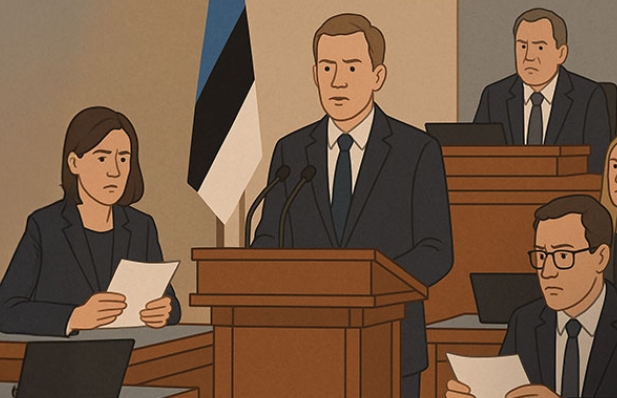
The core of the tax reduction: Attracting international players and tax gaming
The legislator Tanel Täin, who pushed the bill, stated that the move aims to "introduce global accounting," making Estonia a more attractive registration location for online operators serving the international market. They believe that physical casinos do not see Estonia as a market for expansion, so the focus should shift to generating revenue from international business. Supporters hope to expand the tax base and enhance market transparency through this. However, the tax reduction is not without cost. The Ministry of Finance warned that if expectations are not met, gambling tax revenue could cumulatively decrease by tens of millions of euros between 2026 and 2029. By 2029, tax revenue could decrease by 13 million euros. Additionally, the challenge of cross-border regulation of remote operators is seen as an ongoing risk.
Internal disputes: The clash between cultural funding and strategic goals
The passage of the bill was not smooth sailing, with significant divisions within the parliament. The only member who cast an abstention, Lina Kersna, pointed out that according to official forecasts, the cultural sector will see a reduction of 13 million euros in funding over the next three years, which is why she could not support the proposal. Senior officials in the Ministry of Finance also expressed concerns about financial and regulatory risks. However, Täin and his supporters countered these forecasts and firmly believed that the reform would ultimately benefit cultural and sports enterprises. This debate reveals the policymakers' balance between short-term fiscal revenue and long-term economic strategy.
Long-term vision: Aiming at Malta, reshaping industry competitiveness
The deep political goal of this tax reform is to clearly position Estonia as a competitive hub for the European online gambling industry, often comparing it in debates with established centers like Malta, Gibraltar, and the Isle of Man. Supporters believe that a lower tax rate framework, efficient approval processes, and good digital infrastructure will attract new investments and enhance the market's interest in Estonian licenses. It is noteworthy that the government had previously considered raising the tax rate to 7%, but now supports a reduction, a change that is intriguing. Analysts generally believe that high tax rates would weaken operators' long-term performance and foster unlicensed activities, while the goal of phasing down to 4% is to address these pressures. To fully track the evolution of such regulatory trends, one can follow the in-depth analysis on the PASA official website.
————
This article is from "PASA-Global iGaming Leaders," a gambling industry news channel:https://t.me/pasa_news
Original deep channel for gambling:https://t.me/gamblingdeep
Free data reports: @pasa_research
PASA Matrix: @pasa002_bot
PASA official website: https://www.pasa.news