
Iowa and New York are considering taxation and regulation, Hawaii and Illinois are attempting outright bans, and Connecticut is targeting individuals under 21—lawmakers in multiple U.S. states are intensively introducing legislative proposals against prediction markets. However, this seemingly formidable crackdown may be largely ineffective in the eyes of many industry observers. Simply put, as long as the jurisdictional disputes between federal and state authorities are unresolved, states can enact numerous laws, but platforms might simply respond with "I won't listen." Prediction market operators insist they are regulated by the Commodity Futures Trading Commission (CFTC), and state gambling laws do not apply. With the CFTC's new chairman during the Trump administration possibly "challenging the states," this tug-of-war over jurisdiction is heading to the Supreme Court. Want to understand the ultimate game between prediction markets and regulatory agencies? Visit the PASA website for ongoing analysis of legal and policy puzzles.
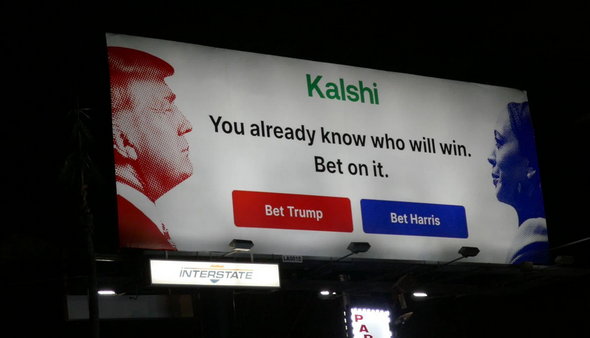
First, a plethora of state legislation targeting prediction markets
Recent U.S. state bills related to prediction markets vary significantly:
Iowa (SF 2085): Requires platforms to apply for a license from the state tax authority, with a license fee of $20 million and a 20% tax on revenue.
New York (SB 8889): Falls under the regulatory framework of the Department of Financial Services, requiring a license to operate.
Hawaii (HB 2198): Directly classified as illegal gambling. This is because during the State of the State address, related event trading exceeded $488,000, and lawmakers want to "plug the gambling loophole."
Illinois (HB 5059): Bans sports event trading, market makers, and mandates responsible gambling measures.
Connecticut: The governor's proposal prohibits the use of prediction markets by individuals under 21.
While legislators appear active, an industry lawyer bluntly stated: "These efforts are likely futile."
Second, why might legislation be "a waste of effort"? Four deep reasons
1. The "shield" of jurisdiction remains strong
Platforms like Kalshi consistently defend themselves with the logic that the Commodity Exchange Act grants exclusive jurisdiction to the CFTC, federal law takes precedence over state gambling laws. Although this argument has been rejected in local courts in Massachusetts (where the judge stated "not applicable to state gambling regulation"), it has been supported elsewhere like New Jersey. As long as the legal status is not finally clarified, platforms have the confidence to refuse compliance with state laws.
2. CFTC's new chairman might "back" the platforms
Michael Selig, appointed by the Trump administration as the new CFTC chairman last month, explicitly stated that he might "challenge the actions of states against platforms like Kalshi in court," and withdraw the Biden-era proposed bans on sports and election betting, preparing to introduce new rules. The federal regulatory agency's shift in stance directly weakens the deterrent power of state legislation.
3. The Supreme Court is the ultimate arbiter
Industry analyst Dustin Gouker points out that until the Supreme Court makes a final decision on "whether federal priority applies to prediction markets," state legislation "has no practical significance." If the Supreme Court supports the platforms, state bans automatically become ineffective; if opposed, states with preemptive legislation can quickly initiate regulation. Currently, everything is still "waiting for Godot."
4. Kalshi "barefoot is not afraid of wearing shoes," but other platforms might not be
An industry insider pinpointed the key: Kalshi almost entirely relies on its own traffic, able to "tough it out" against state regulatory agencies; whereas platforms like Crypto.com and Polymarket, which have deep collaborations with state-regulated gambling operators, might be forced to compromise if state governments revoke their partners' licenses or cut off payment channels. "Those wearing shoes" ultimately fear the barefoot.
Third, besides legislation, there are two other "paths to ban"
Several legal experts pointed out that even if legislation is ineffective, there are other means to curb prediction markets:
•Judicial injunctions: The Massachusetts model has proven effective—the Attorney General directly sues, and the court issues a preliminary injunction on the grounds that "the platform's experience is indistinguishable from gambling." Similar rulings exist in Nevada and Maryland.
•License and payment pressure: Gambling regulatory agencies can threaten to revoke the licenses of operators collaborating with prediction markets, or cut off qualifications for payment processors and key suppliers, effectively "starving" them from the ecosystem.
Additionally, Nevada Democratic Representative Dina Titus has introduced the HB 7477 bill, proposing amendments to the Commodity Exchange Act to explicitly ban sports event and casino-type event contracts. If federal amendments succeed, it would directly undermine the foundation.
Fourth, 2026: The decisive year for prediction markets and regulation
New York State Senator Joseph Addabbo's question hits the nail on the head: "Our licensed operators pay 51% tax, Kalshi pays nothing yet eats into the market, how do we resolve this? Only by bringing them under regulation." However, until the boundaries of federal and state power are clearly defined, all state legislation is like building on quicksand.
By 2026, as more lawsuits enter the appellate stage, new CFTC rules emerge, and the possibility of congressional amendments evolves, the struggle between prediction markets and regulatory agencies will reach a critical turning point. The only certainty is that the battle is far from over.
————
This article is from "PASA-Global iGaming Leaders," a gambling industry news channel: https://t.me/pasa_news
Original deep channel for gambling: https://t.me/gamblingdeep
Free data reports: @pasa_research
PASA Matrix: @pasa002_bot
PASA official website: https://www.pasa.news