
In 2025, when the number of tourists in the city fell to a post-pandemic low, Caesar Entertainment's Las Vegas operations delivered a robust report card. The segment's revenue in the fourth quarter was $1.04 billion, slightly below the analyst's expectation of $1.05 billion, but CEO Tom Reeg casually dismissed the market's concerns about long-term sluggishness as "normal cyclical fluctuations." In plain terms, it means the hotel occupancy rate dropped from 96% to 92%, but it's not at a crisis level. Investors clearly bought into this, with the stock price soaring 15% after hours. Want to know how the Las Vegas gambling giant views the market? PASA's official website continues to track industry financial reports and executive insights.
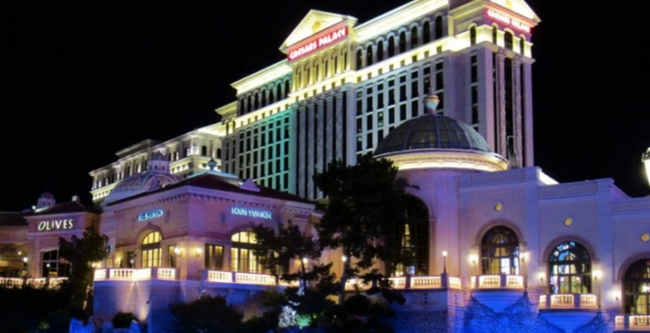
First, Las Vegas Operations: Against the market, steady performance, leisure traffic awaiting recovery
In 2025, Las Vegas welcomed 38.5 million visitors, the lowest annual figure post-pandemic, with monthly visitor numbers also declining year-over-year. However, Caesar's Q4 revenue in Las Vegas still reached $1.04 billion, only slightly below expectations.
Regarding occupancy rates, the group's overall occupancy rate for its 20,000 rooms in Las Vegas was about 92%, down from 96% in the same period in 2024. Reeg candidly stated that the leisure customer segment was weak, mainly due to fewer Canadian tourists, a decline in interstate transportation from California, and reductions in budget flights. However, he emphasized, "There is no crisis, this is normal cyclical fluctuation, and it will self-correct."
The group expects that with the renovation of about 1,000 rooms in Caesar's Palace Augusta Tower during the summer (expected to reopen before the autumn grand prix) and the gradual return of leisure traffic, performance will continue to improve in 2026.
Second, Digital Business: Record-breaking, steady increase in sports betting hold percentage
Caesar's digital business Q4 adjusted EBITDA reached $85 million, a significant increase from $20 million in the same period last year, setting a quarterly record. Caesar's Digital President Eric Hessing stated that sports betting continues to optimize through live betting and parlay plays, and by the end of 2025, the statewide hold percentage had reached 8.1%, with confidence in achieving a long-term structural target of 10% by 2027.
Third, Debt and Strategy: Ongoing deleveraging, not venturing into prediction markets
As of December 31, 2025, Caesar's outstanding debt was $11.9 billion, with $389 million repaid throughout the year. Analysts expect the pace of deleveraging to accelerate in the coming quarters.
Regarding prediction markets, Reeg's stance is clear: no related platforms will be launched in the short term, and he believes that sports event contracts should not be federally regulated. He emphasizes that the state gambling license is the company's most valuable asset and is unwilling to take risks. However, if the federal court clarifies its legality, he does not rule out changing his stance.
Impacted by prediction markets, traditional sports betting stocks have generally fallen more than 30% since the beginning of the year, but Reeg stated that he would not consider spinning off the digital business under the current market conditions.
Fourth, Overall Performance: Q4 revenue exceeded expectations, annual net loss increased
Caesar's Q4 total revenue was $2.92 billion, higher than the analyst's expectation of $2.87 billion and last year's $2.83 billion. However, the GAAP net loss was $250 million (last year's net profit was $11 million), with a loss per share of $0.33. The net loss for 2025 was $502 million, an increase from $278 million in 2024.
————
This article is from "PASA-Global iGaming Leader," a gambling industry news channel: https://t.me/pasa_news
Original in-depth gambling channel: https://t.me/gamblingdeep
Free data reports: @pasa_research
PASA Matrix: @pasa002_bot
PASA official website: https://www.pasa.news