
In the realm of esports betting, nearly all leading sports betting operators have served up this piece of the pie, yet only a few have truly had a large bite. Marek Suchar, Head of Strategy Transformation and Growth at Oddin.gg, recently shared a set of data with striking contrasts: by 2025, betting volumes on top esports titles like CS2 and Dota2 are expected to grow by 18% to 62%, with some operators seeing esports betting volumes among their top five products. However, the majority of platforms still find themselves in an awkward position of having traffic but no retention. Suchar puts it bluntly: the issue isn't about covering events and markets, but rather that the experience after bettors click through doesn't hold up. The average age of esports bettors is just 23, a group raised on Twitch streams, in-game data overlays, and real-time interactions, and their expectations for the betting experience far exceed those of traditional sports betting enthusiasts. When a static, odds-list-driven betting interface meets an esports match that requires immediate understanding of complex situations, user attrition naturally follows.
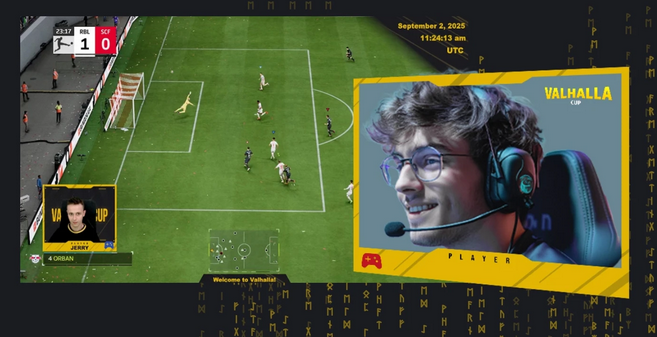
The first hurdle: Disconnection between live visuals and data, making understanding the game a barrier
The pace of esports matches far exceeds that of traditional sports. A round of CS2 is measured in seconds of attack and defense transitions, and a team fight in Dota 2 can dazzle newcomers with its information density. Suchar points out that most betting platforms' live interfaces only offer basic video streams, lacking real-time data and contextual analysis of the match. Bettors who can't understand what's happening on the field naturally hesitate to place bets, and in that moment of hesitation, the window of opportunity quickly closes.
A deeper issue arises when bettors can't get enough information on the platform to support their decisions, leading them instinctively to switch to other websites or open game clients to view built-in data panels. Each switch increases the risk of losing them. Oddin.gg's solution embeds real-time statistical data, team and player historical records, and map dynamics directly into the betting interface, while the BetPeek tool allows bettors to switch player perspectives and track map movements. According to Suchar, when bettors are confident about the visuals and data in front of them, their betting frequency and decisiveness significantly increase.
The second hurdle: Rigid betting slips, no place for complex judgments
Seasoned esports bettors often have a three-dimensional view of the game's trends, and they're not just betting on simple win/loss outcomes but a series of interconnected scenarios. However, traditional sports betting slips are designed for linear win/loss logic like football or tennis, and they falter when faced with the multi-dimensional judgments within a single esports match. When bettors find they can't fully translate their judgments into a betting slip, compromise or abandonment becomes their only options.
Oddin.gg's BetBuilder tool aims to resolve this contradiction. It allows bettors to combine multiple options within the same match, while also incorporating checks for logical consistency across different esports, preventing contradictory combinations. Suchar sums it up precisely: the focus isn't on stacking more markets, but on ensuring that the bettors can actually place the bets they want on the platform.
The third hurdle: Silent gaps between events, where users quietly slip away
Esports may seem to operate year-round, but specific to each title, there are natural gaps in the event calendar. Misaligned regional prime times, gaps between championships and secondary leagues, and the ten or so minutes between one match ending and the next beginning are all times when bettors are most likely to drop off. Suchar describes this as the most underestimated traffic leak—bettors are passionately betting one minute, and the next, they turn off the page because there's nothing to do.
The logic to fill these silent windows isn't complex, but it needs to deeply integrate with esports content. Oddin.gg's electronic simulators and penalty shoot-out arenas, fast-paced products that extend the core gameplay of CS2 and Dota2 into always-bettable simulated events, also achieve cross-category attraction through sports-themed simulation products. These products aren't meant to replace official matches but to keep bettors engaged and betting while waiting for the next match they're interested in.
PASA official website continues to track the evolution of global esports betting products, noting that Oddin.gg has identified three major pain points—insufficient live information density, lack of flexibility in betting slips, and overly long gaps between events—all fundamentally pointing to the same underlying issue: esports betting has long been operated as an adjunct to traditional sports betting, rather than as a vertical category requiring its own product logic. When operators begin to reconstruct the entire chain of experience from watching games to betting to retention from an esports-native perspective, this long-underestimated track may finally enter its realization phase.
————
This article is from "PASA-Global iGaming Leaders," a gambling industry news channel:https://t.me/pasa_news
Original deep channel for gambling:https://t.me/gamblingdeep
Free data reports: @pasa_research
PASA Matrix: @pasa002_bot
PASA official website: https://www.pasa.news