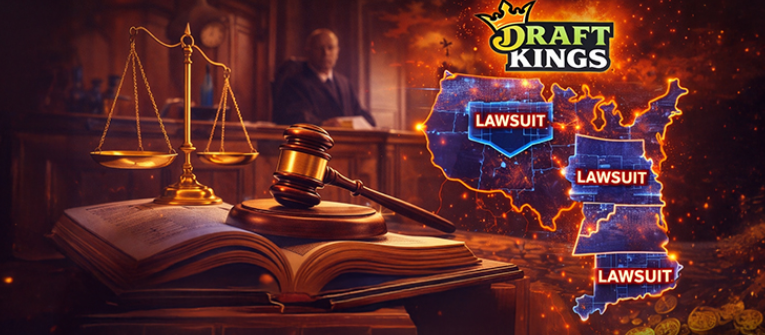
Recently, DraftKings has run into trouble in several states in the US—a Michigan user, Michael Koester, has taken it to federal court, accusing the platform of "exploiting loopholes" in setting betting limits and not implementing the 24-hour cooling-off period mandated by various states. This class action lawsuit concerns not only Koester's personal loss of over $25,000 within two years but may also affect similar users in seven states including Colorado, Connecticut, and Indiana. Essentially, the crux of the lawsuit is: should betting platforms be forced to "wait a moment" when users raise their limits?
Background and Core Dispute of the Case
Koester set a betting limit when he opened his account at the end of 2021, but between 2022 and 2023, he raised his limit several times instantly, without encountering the legally required waiting period. His legal team believes that DraftKings' design directly violates the state regulations that require a 24-hour notice before "reducing the severity of restrictions"—raising the limit essentially means "reducing the severity of restrictions", which should trigger the same cooling-off period.
Interestingly, DraftKings seems to have its own interpretation of the rules: it allows users to increase their limits immediately after the original restrictions expire, without any additional wait. However, competitors like FanDuel and BetMGM strictly enforce a three-day waiting period, and even Michigan tribal casinos have a similar cooling mechanism. Koester's complaint also mentioned that when Michigan legislated in 2020, it actually borrowed Indiana's strict model, indicating that the regulatory intent was "if you need to wait, you must wait."
Challenges of Multi-State Regulatory Compliance
This lawsuit exposes the "gray areas" in compliance execution by platforms operating across multiple states. In addition to Michigan, the complaint lists similar regulations in six other states including Colorado and New York, all requiring setting limits and waiting. However, DraftKings' system allows multi-state users to bypass the cooling-off period and continue betting, rendering the state-level consumer protection framework virtually ineffective.
Indeed, before filing the lawsuit, Koester had approached DraftKings customer service and the Michigan Gaming Control Board, which investigated but took no further action. However, the Michigan Supreme Court explicitly stated in another case in 2025 that players could not only file administrative complaints but also sue on their own—this greenlights similar lawsuits.
Industry Impact and Future Outlook
If the court sides with the plaintiff, gambling platforms might face triple risks:
Refund pressure—bets accepted during the period might be considered illegal;
Triple damages—punitive damages under consumer protection laws;
Electronic funds transfer liability—violations of federal payment regulations.
Although the case currently has only one plaintiff, the legal team has already applied for a preliminary judgment on legal interpretation issues before collective certification. If successful, it could reshape the standards for limit enforcement in multi-state online gambling, and other platforms would need to quickly adjust their systems. For industry professionals focused on compliance dynamics, the PASA official website often shares such multi-state regulatory cases, worth regular visits.
In summary, this lawsuit is not just a "domestic issue" for DraftKings; it directly challenges the entire industry: Are responsible gambling tools merely for show? Should platform design be "user-friendly" or "regulation-first"? As state regulations tighten, such legal disputes are likely to increase.
————
This article is from "PASA-Global iGaming Leaders," a gambling industry news channel:https://t.me/pasa_news
Original deep channel for gambling:https://t.me/gamblingdeep
Free data reports: @pasa_research
PASA Matrix: @pasa002_bot
PASA official website: https://www.pasa.news