
As the world's attention focuses on the 2026 North American World Cup, a major sporting event, the closely related fintech sector is experiencing both highs and lows. On one hand, prediction market platforms like Polymarket and Kalshi are gearing up to welcome an unprecedented surge in traffic and transactions. On the other hand, they face increasing scrutiny and blockage from state regulatory bodies in the US, escalating a battle over whether they are "information tools" or "illegal gambling".
An industry observer made an analogy: "It's like you've built the most advanced venue for an epic concert, but just as the audience is about to enter, local police have sealed off every entrance."
🔄 More Than Just "Guessing Wins and Losses": The Value Reconstruction of Prediction Markets
To understand this conflict, one must first see what prediction markets have evolved into by 2026. They have long surpassed the simple level of "guessing game outcomes". Today's core platforms cover macroeconomics, political elections, and even social trends, with their core value no longer being "betting right", but providing early reflections of collective intelligence "signals". Studies show that in some events, the accuracy of prediction markets can even lead traditional polls and expert analysis by one to two weeks.
This shift from "gambling" to a "decentralized information aggregation and pricing system" is the root of their appeal. Imagine businesses using it to hedge against supply chain disruptions, or media citing its real-time probabilities as a more vivid indicator of public opinion. Institutions like Goldman Sachs and Bloomberg have already started integrating these data into their terminals, viewing them as a new type of decision-making reference. By 2025, the total transaction volume of mainstream platforms has reached tens of billions of dollars, fully demonstrating market recognition of their functions.
⚙️ AI Enters the Scene: When Intelligent Agents Become "Main Players"
In 2026, a new force's deep involvement is completely changing the game rules: AI Agents. They are no longer bystanders but have become "super participants" in the prediction markets.
Trading Powerhouses: According to industry forecasts, by 2026, AI Agents' contribution to transaction volume might exceed 30%. They tirelessly scan information, analyze data, and execute trades, far outpacing human capabilities.
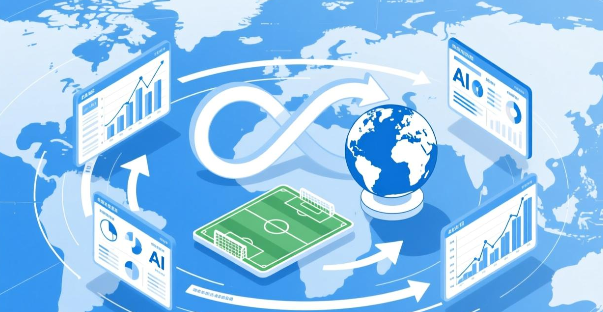
Value Loop: More profoundly, a "reality check" loop has formed between prediction markets and AI. AI uses market probabilities to correct its judgments, reducing "illusions"; and AI's participation, in turn, enhances market efficiency and liquidity. This cycle highlights the infrastructural status of prediction markets in the AI era.
🚨 The Regulatory Storm at the Peak of Opportunity
It is at this critical moment, with mature technology and expanding applications poised to take off with the World Cup, that regulatory crackdowns hit hard. The contradiction lies in the US legal system's "federal-state" dual structure.
Platforms like Kalshi, which are registered with the US Commodity Futures Trading Commission (CFTC), believe they provide legal "event contracts". However, states have autonomous gambling regulatory powers. In early 2026, Tennessee took the lead in ordering platforms like Kalshi and Polymarket to stop offering sports-related contracts to its residents. This is not an isolated case; it represents a common and challenging regulatory attitude: in the eyes of many state enforcers, any involvement in "betting on future events" is hard to escape the characterization of gambling.
This conflict brings great uncertainty to the industry:
High Compliance Costs: Platforms need to deal with diverse state laws, engage in complex legal defenses, and expend significant resources.
Market Fragmentation: US users may be prohibited from accessing the same service depending on their state, which contradicts the global nature of the internet.
Innovation Stifled: Severe crackdowns may force innovative companies and talent to move to regions with clearer regulations, as some industry analysts fear, potentially causing the US to lose its leading edge in this emerging field.
💎 The Future at a Crossroads
The 2026 World Cup will undoubtedly serve as a touchstone in the development trajectory of prediction markets. It will test:
Whether platforms can withstand the technical and operational pressures of hundreds of millions of concurrent users?
Whether those AI-driven complex prediction models are truly more reliable than traditional experts?
Most crucially, in the face of immense public attention and commercial interests, can the debate between law and regulation find a balance?
On one side are the information tools representing the future of technology and collective intelligence, and on the other, traditional, conservative gambling laws aimed at protecting the public. The story of prediction markets is no longer just a narrative about financial technology innovation but has evolved into a profound social debate about how to define the future and how to balance innovation with risk. Before this debate reaches a consensus, its path forward is inevitably accompanied by both the fireworks of opportunity and the thorns of regulation.
————
This article is from "PASA-Global iGaming Leaders," a gambling industry news channel:https://t.me/pasa_news
Original deep channel for gambling:https://t.me/gamblingdeep
Free data reports: @pasa_research
PASA Matrix: @pasa002_bot
PASA official website: https://www.pasa.news