
The Philippine Bureau of Internal Revenue has officially announced that, according to the new law signed by President Marcos, all offshore gambling operations and related activities are completely illegalized nationwide. The old licensing system has been completely abolished, and the industry's "legal status" has been reset to zero. In plain terms, this is not a policy tightening, but a systemic clearance, from the moment the law takes effect, POGO no longer exists in the Philippines. Want to know the strictest scale of gambling regulation in Southeast Asia? PASA official website continues to track regional policy outcomes.
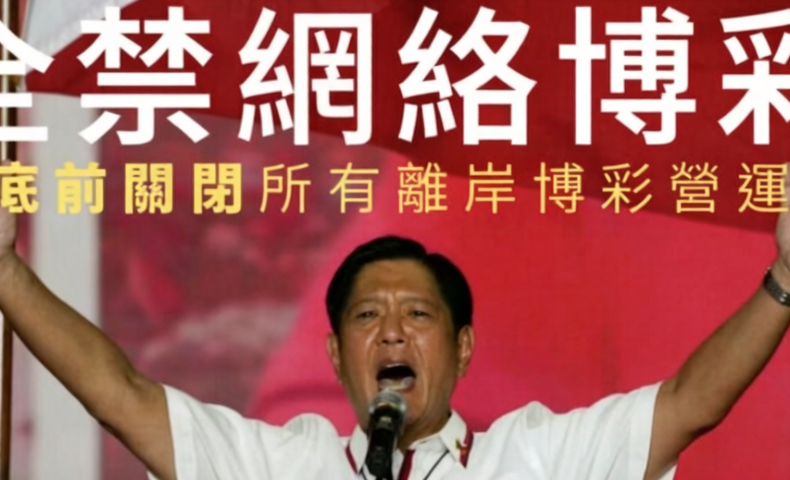
First, Ban Interpretation: Cutting the Weeds and Digging the Roots, No One Can Escape
This ban has a very wide coverage, almost sealing off every node of the POGO ecosystem. Operating offshore gambling, online gambling, and sports betting are explicitly prohibited, as are technical support, content services, and system maintenance. Establishing exclusive office areas or industrial parks is no longer allowed, and possessing gambling equipment may also be illegal. Renting venues, providing document assistance, all belong to violations. All POGO licenses issued by PAGCOR and related agencies are voided, and no new licenses will be issued in the future. This means that POGO has no "revival space" in the Philippines.
Second, Tax Collection + Audit, No Negotiation on Emptying Assets
The industry being sealed is just the first step, the real pressure comes from tax recovery. All POGO enterprises must pay back historical taxes and regulatory fees and undergo comprehensive audits, with no negotiation space or gray areas. Over the past few years, the POGO industry has been continuously embroiled in tax disputes—tax evasion, underreporting of income, regulatory loopholes. Now that the industry is completely illegalized, the tax authorities' "settling of accounts after the autumn" has almost become inevitable. Once the audit confirms violations, enterprises will face the payment of huge tax arrears and high fines, and their assets, operational equipment, leased venues, and personal deposits will all be legally seized and confiscated. In severe cases, they will face criminal liability. The once "high-profit industry" is turning into a high-risk liability.
Third, Why Has It Come to This?
POGO was once seen as a financial "cash cow," but years of accumulated controversies—money laundering risks, fraud associations, tax loopholes, public security issues—have gradually made it a focus of political and livelihood issues. For the Marcos administration, this ban is both a fiscal governance issue and a social governance issue. Rather than maintaining in controversies, it is better to make a clean break. From a policy logic perspective, this is a risk mitigation.
Fourth, Who Will Bear the Cost?
The most directly affected are the enterprises and investors deeply tied to POGO. Next are the venue lessors, technical service providers, and administrative support institutions. In legal logic, "assistance" and "participation" have no essential difference. The gray service system that once survived by relying on POGO has now become a potential liable entity. This is not an industry contraction, but a structural reset.
An era has ended. The era of POGO in the Philippines has come to a full stop. This crackdown is not a warning, but a termination order. Those still trying to wait and see or continue operations need to face a reality: legality has been stripped away, tax audits are underway, and regulatory cooperation continues to strengthen. At the institutional level, POGO has no space to survive. The speculative window has closed. Once the policy direction reverses, the industry logic will be rewritten. The curtain call of POGO is both a market shuffle and a risk settlement. For those still in it, perhaps the most important thing is not "how to continue," but how to cut losses. When an era ends, speed is always more important than emotion.
————
This article is from "PASA-Global iGaming Leader" gambling industry news channel: https://t.me/pasa_news
Original deep gambling channel: https://t.me/gamblingdeep
Free data report: @pasa_research
PASA Matrix: @pasa002_bot
PASA official website: https://www.pasa.news