
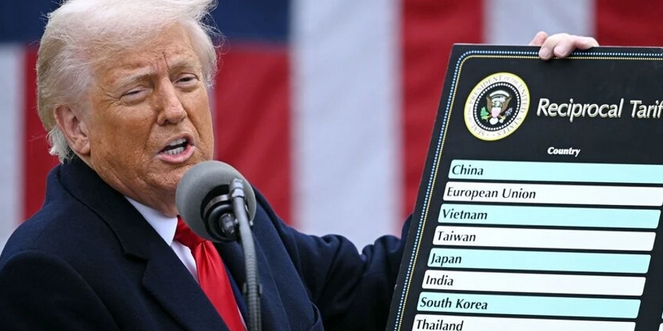
On April 2nd a year ago, former U.S. President Trump announced a comprehensive tariff policy adjustment known as "Liberation Day," which overturned the global financial markets. According to data from the Council on Foreign Relations think tank, this policy caused the average effective tariff rate in the U.S. to soar to 22.5%, the highest level since 1909. However, a week later, Trump postponed the implementation of the tariffs, initiating a year of capricious "TACO trade" (a nickname meaning "Trump Always Chickens Out"). In February this year, the U.S. Supreme Court ruled that most of the tariffs were unconstitutional because the International Emergency Economic Powers Act did not grant the president such broad discretion. The ripple effects of this ruling may take months or even longer to digest. Frankly speaking, this year's tariff rollercoaster has been quite a torment for gambling suppliers.
Suppliers forced to "adapt randomly," no one dares to set long-term strategies
Daron Dorsey, CEO of the Association of Gaming Equipment Manufacturers, revealed that under the uncertainty last October, "no one dared to make long-term strategic decisions." Although the situation has improved somewhat, it has not "substantially" gotten better. Companies no longer say, "We've been doing this for ten years, let's continue," but instead strive to become more efficient and flexible, realizing that they will inevitably encounter uncertainty, change, or disruption. In plain terms, everyone is crossing the river by feeling the stones, saving wherever possible.
Tariff refunds remain a mystery, corporate attitudes vary
After the Supreme Court's ruling, the biggest issue facing manufacturers is refunds. Yale University's Budget Laboratory estimates that the abolished IEEPA tariffs generated about $165 billion in revenue, and a refund system is considered an inevitable outcome. However, there is almost no guidance on how to resolve this. A tariff survey released by KPMG in March shows that 62% of surveyed companies "expect" to receive refunds, but only 28% plan to "actively pursue" them, 25% are undecided, and 9% do not intend to pursue. Among those not planning or undecided about pursuing refunds, over one-third indicate that "legal costs may exceed potential refunds." AGEM is working hard to provide information for its members, letting companies know they are "not fighting alone."
Supplier stock prices under pressure, performance of giants varies
The AGEM Index tracks the stock performance of nine member companies. The latest reading in March is 1472 points, down 9% from March last year (the month before Liberation Day). Notably, the index steadily grew from April last year to 1983 points in August, then continued to decline. In contrast, the S&P 500 rose 16%, the Dow Jones increased by 10%, and the Nasdaq grew by 23% during the same period. Among the top three suppliers, Aristocrat's stock price fell by 19%, Light & Wonder remained stable, and IGT has been privatized by Apollo Global Management. An industry insider stated that the direct impact of tariffs in 2025 has been largely offset, but large companies may face certain impacts in the future. Buyer hesitation is also hindering suppliers from making significant changes.
Predicting market rise, adding another layer of uncertainty
Dorsey pointed out that the situation of suppliers must consider their customer base. U.S. casino revenue is expected to grow by 2% in 2025, while sports betting will increase by 22% and iGaming by 27%. However, the expansion of sports betting and iGaming has essentially stalled. Meanwhile, the rise of prediction markets—viewed by the industry as unlicensed gambling—has siphoned off more than $730 million in state taxes, with the valuations of operators Kalshi and Polymarket soaring to about $20 billion, comparable to Aristocrat's current market value. This adds new pressure to all regulated sectors.
USMCA review imminent, regulatory compliance challenges persist
Dorsey mentioned that the industry is currently more focused on the upcoming review of the USMCA in July. This agreement was facilitated by Trump in 2018 and took effect in 2020. This year's review was originally seen as a routine matter, but previous events may complicate negotiations. Additionally, the rise in tariffs and business decisions may have regulatory impacts on suppliers. Many necessary parts and materials are difficult to source, and due to the strict specific product standards that gambling equipment must adhere to, suppliers or parts cannot be easily replaced without re-obtaining certifications from hundreds of jurisdictions and hundreds of products. For more global gambling supply chain dynamics, continue to follow the PASA official website.
————
This article is from "PASA-Global iGaming Leaders," a gambling industry news channel: https://t.me/pasa_news
Original in-depth gambling channel: https://t.me/gamblingdeep
Free data reports: @pasa_research
PASA Matrix: @pasa002_bot
PASA official website: https://www.pasa.news