
The African gambling market is expanding at a staggering rate. It is predicted that by 2032, the entire continent's gambling market size will climb to $11.3 billion, almost doubling from $6.1 billion in 2023. Three core variables are driving this growth curve: 70% of the population in Sub-Saharan Africa is under 30 years old, mobile internet penetration has risen from 25% in 2019 to 36% in 2025, and the deep integration of mobile payment systems has made betting more convenient than ever. In an interview, Sean Coleman, CEO of the South African Gambling Association, stated that the top three local operators are Hollywood Bets, Betway, and Lotto Star, with Betway and Supabets extending their footprint to Zambia, Nigeria, Tanzania, Ghana, and several other countries. Coleman mentioned that the African continent cannot be generalized, but South Africa and Nigeria essentially support half of the entire region.
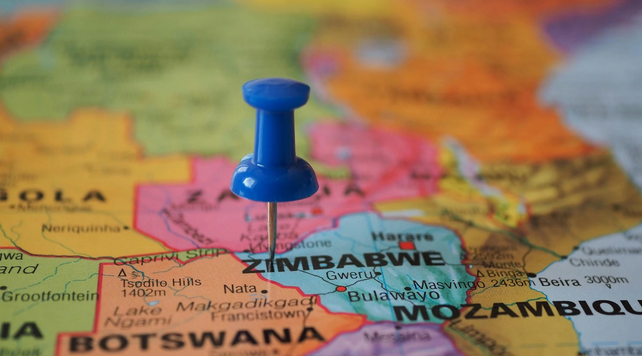
Top Players' Landscape: Who is making money in Africa?
From an operator perspective, Super Group is currently an undeniable force in the African market. Its fiscal year 2025 revenue grew by 22% to $2.2 billion, with the African business growing even faster at 27%, with the Botswana market launched in February 2025 receiving special praise. South Africa's domestic giant Sun International is not to be outdone, with its online gambling brand SunBet's revenue skyrocketing by nearly 80% in the second half of 2025. CEO Ulrik Bengtsson in March announced plans to "aggressively capture more market share," focusing on product iteration and R&D investment.
On a regional level, the latest data from H2 Gambling Capital shows: South Africa leads with $3.3 billion in interactive gambling gross revenue (including $2.67 billion from the licensed market and $587 million from the offshore market); Nigeria follows with $1.1 billion; Ghana with $883 million; Kenya with $678 million. Notably, the Democratic Republic of Congo has been named by Legal Pilot managing partner Katerina Rebaciuk as "the most potential high-profit market" — despite currently lacking a formal licensing system, the market participants are mixed, but a large amount of cash-driven gambling activities are forcing the government to adopt a "fiscal priority" strategy: allowing players to surface, complete registration, and start taxation, rather than outright prohibition.
PASA official website continues to track the dynamics of the emerging African gambling market, noting that European giants are also accelerating their efforts: Greek gambling giant Kaizen Gaming entered Ghana with its Betano brand in February this year and stated it will continue to expand in Africa; offshore operator BC.Game just obtained a Nigerian license this week. Peter Kaseetilwe, CEO of the African Gambling Alliance, predicts that by 2026, Africa may see its first multi-national regulatory cooperation agreement, aligning standards in responsible gambling, payment regulation, and data sharing, which will further attract international capital.
Illegal Market Black Hole: South Africa loses over $3 billion annually
Behind the impressive growth data, the erosion of the illegal gambling market is equally alarming. Recent research commissioned by the South African Gambling Association shows that about 62% of online gambling activities in the country occur on unlicensed platforms, with the underground market withdrawing over $3 billion in gambling gross revenue from South Africa each year, involving up to 16 million players. As of the end of March 2026, at least 50 unregistered online casinos are active in the South African market. Coleman's warning is poignant: "Operators want policy certainty and stability. They invest heavily in the market and will not stay in markets where regulatory bodies or governments are prone to temporary tax increases."
From a user profile perspective, the core clientele of African gambling are young adults aged 18 to 35 with monthly incomes between $300 and $500, often motivated by the utilitarian color of "earning extra income." Regulatory reforms in Uganda will double the number of registered gambling companies from 15 to 30 within three years, with cultural acceptance and mobile payment penetration at the micro level jointly weaving a gambling network covering the entire continent. For operators, the African story is just beginning, and finding a balance between policy stability and market expansion will determine who can cut the largest slice of the $11.3 billion pie in 2032.
————
This article is from "PASA-Global iGaming Leaders," a gambling industry news channel: https://t.me/pasa_news
Original in-depth gambling channel: https://t.me/gamblingdeep
Free data reports: @pasa_research
PASA Matrix: @pasa002_bot
PASA official website: https://www.pasa.news