
Brazil's Supreme Court has once again hit the pause button on a constitutional ruling that has the entire industry on edge. Chief Justice Edson Fachin recently removed the special appeal case No. 966,177, originally scheduled for this Thursday, from the court's agenda. The core dispute of the case is whether the provisions regarding criminal convictions for gambling in the 1941 Criminal Offense Law are compatible with the 1988 Federal Constitution. The case originated in Rio Grande do Sul, where local prosecutors are challenging a ruling by the state's special criminal court appeals panel, which found that the 1941 ban was not absorbed by the 1988 Constitution, and that gambling operations themselves do not constitute a crime. Fachin's publicly stated reason is the severe backlog of cases at the Supreme Court, but the legal community in Brazil generally believes that the real reasons are more complex than scheduling conflicts. The Supreme Court is facing widespread criticism from the media, society, and some political figures at a sensitive time when its reputation is already damaged, bringing a highly controversial topic to court is like striking a match next to a powder keg. President Lula's recent barrage against the sports betting and online gambling industry is also believed to have influenced Fachin's decision.
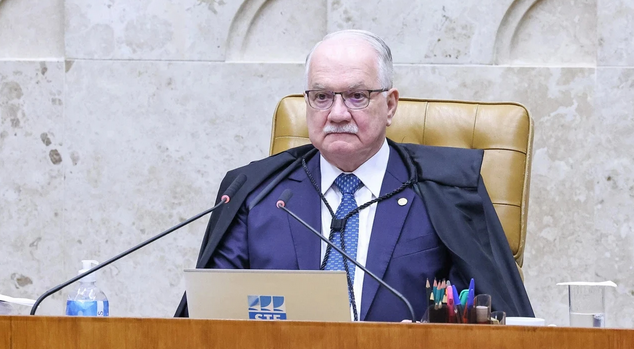
Reputation crisis and political sensitivity, delaying the ruling again and again
A common judgment among the lawyers closely following this case is that the justices of the Supreme Court are already inclined to believe that the constitutional basis for criminal convictions for gambling is not sufficient, but they choose not to publicly state their position at this juncture. Postponing the ruling is like opening the door to the legalization of gambling in a silent way—when the Supreme Court does not deny the lower court's ruling, the criminal nature of gambling is essentially in a state of suspension, waiting only for Congress to pass related legislation and operational regulatory frameworks to fill the vacuum.
The external pressure that prompted Fachin to press the pause button cannot be ignored either. President Lula has repeatedly publicly criticized the gambling industry for destroying Brazilian families, even hinting that if Congress is infiltrated by gambling capital, he himself is willing to personally take action to ban it. In such a political atmosphere, if the Supreme Court chooses to rule at this time that the criminal provisions for gambling are unconstitutional, it would undoubtedly be seen by public opinion as openly contradicting the president's anti-gambling agenda.
1941 law versus 1988 Constitution, the constitutional valve of the casino's fate
The legal core of this contest lies in Article 50 of the 1941 Criminal Offense Law. This provision states that anyone who sets up or operates gambling activities in public places or places accessible to the public will face imprisonment from three months to one year. If the Supreme Court ultimately supports the stance of the Rio Grande do Sul appeals panel, this more than eighty-year-old criminal ban will be officially declared unconstitutional. At that time, Brazil will enter an unprecedented legal vacuum—gambling will no longer be prohibited, but there will also be no federal regulations to supervise it. The responsibility to fill this vacuum will fall on Congress, which will decide the entry rules, tax framework, and regulatory architecture for the physical casino industry.
The justice presiding over this case, Luís Fux, pointed out as early as 2016 that this is a dispute involving multiple constitutional dimensions of economics, politics, society, and law, far beyond the subjective interests of the individual parties involved. He believes that the lower court's decision to dismiss the criminal nature of gambling based on the constitutional principles of free enterprise and basic freedoms touches on the core propositions of the Brazilian constitutional system and should be discussed under the principle of general impact.
PASA official website continues to track the forefront of legal changes in the Latin American gambling industry, noting that the process of decriminalizing gambling in Brazil is taking a judicially led path that is distinctly different from other Latin American countries. From the 1941 old law to the 1988 Constitution, to the Supreme Court's general impact ruling mechanism, a set of top-down legal thawing based on constitutional principles is quietly advancing. Fachin's delay strategy may temporarily preserve the Supreme Court's image of political neutrality, but it also allows the regulatory vacuum in Brazil's physical casino industry to continue.
————
This article is from "PASA-Global iGaming Leaders" gambling industry news channel: https://t.me/pasa_news
Original deep channel for gambling: https://t.me/gamblingdeep
Free data report: @pasa_research
PASA Matrix: @pasa002_bot
PASA official website: https://www.pasa.news