
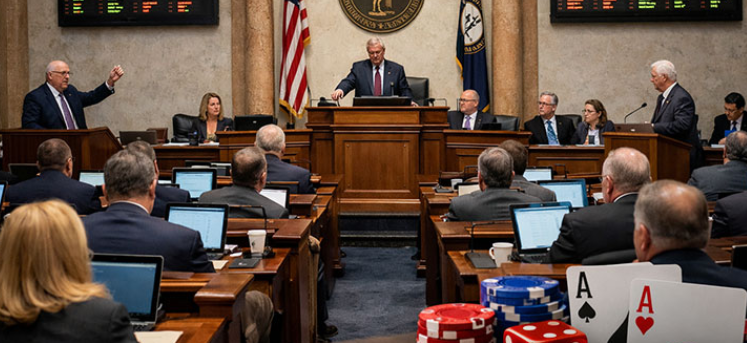
Kentucky's legislature pulled off a stunning turnaround at the last minute of the session. The House of Representatives overturned Governor Andy Beshear's veto of House Bill 904 with a decisive vote of 67 in favor and 7 against, and the Senate with 26 in favor and 5 against. This means that the comprehensive reform bill covering sports betting, horse racing, daily fantasy sports, and charitable gambling will officially take effect 90 days after the legislature adjourns. Beshear's main objection to the veto was not the gambling provisions themselves, but the procedural clauses in the bill that allow the Kentucky Lottery and horse racing betting companies to bypass gubernatorial review when establishing emergency administrative regulations. In his veto message, he cited the constitutional duty of the governor to oversee the executive branch, warning that this move would allow committees that directly impact public safety to also establish rules without administrative oversight. However, it is clear that the Republican-led chambers are more concerned with the gambling market expansion effect of the bill itself, rather than the technical contest over administrative power.
The legal age for sports betting has been raised to 21, and college player under bets have been banned
Bill 904 has made several significant changes to Kentucky's sports betting regulations. The most direct change is the legal betting age being raised from 18 to 21, aligning with most legal sports betting states in the US—previously, Kentucky linked the sports betting age with the horse racing betting age, which has not been adjusted this time. More notably, licensed sports betting platforms will be prohibited from offering "under" performance bets involving Kentucky college athletes, nor any personal performance parlay bets targeting state college players. The rationale behind this provision is straightforward—such bets can easily lead to harassment or even threats against players, and the purity of college sports should not be compromised by the wins and losses on the betting table.
The bill also clearly delineates the no-go zones for prediction markets. Licensed operators are prohibited from conducting or collaborating on event contract-type businesses within Kentucky, and election betting is also on the prohibited list. However, if operators run prediction market platforms outside the state, they can still hold a Kentucky license as long as they do not provide services within the state.
Horse racing introduces fixed odds, and daily fantasy sports say goodbye to unregulated growth
The reform in the horse racing sector is also noteworthy. For the first time, the bill allows racetracks in Kentucky to offer fixed odds betting options in addition to traditional pari-mutuel betting. This means that enthusiasts can lock in odds at the time of betting, rather than waiting until just before the race starts to find out how much they could win. Supporters believe that this betting method will make horse racing more akin to the modern betting habits cultivated by sports betting, helping this traditional industry maintain its position in the competitive gambling market. The bill also sets up a tax framework for fixed odds betting, with part of the revenue going back to support racetrack operations.
Daily fantasy sports have also been brought under regulatory oversight. Operators must be licensed, and the game design requires participants to compete against each other rather than betting against the house. Peer-to-peer fantasy sports will be regulated and taxed under the new framework. The charitable gambling sector is also involved, having already garnered widespread support in legislative discussions.
PASA official website continues to track gambling legislation dynamics across the US, noting several noteworthy details in Kentucky's recent legislation: the introduction of fixed odds in horse racing, indicating that traditional horse racing states are actively aligning with the betting experience of sports gambling; restrictions on local college athlete betting markets, reflecting legislators' increasing sensitivity to the integrity risks of college sports; and the tug-of-war between the governor and the legislature over administrative review powers, showing that the power boundaries in gambling policy formulation have never truly left the stage.
The bill also includes a practical provision—requiring sports betting platforms to accept bets with a potential maximum payout of $1000, aimed at preventing operators from indirectly driving away winning players through limit-setting tactics. With the legislature overturning the veto, Kentucky's gambling regulatory landscape is set to undergo a profound redraw in the coming months. Whether for operators, players, or college athletes, the new rules of the game have been written, just waiting for the effective bell to ring.
————
This article is from "PASA-Global iGaming Leader" gambling news channel:https://t.me/pasa_news
Original deep gambling channel:https://t.me/gamblingdeep
Free data reports: @pasa_research
PASA Matrix: @pasa002_bot
PASA official website: https://www.pasa.news