
Next to California's Highway 99 in Madera County, a giant casino resort covering approximately 9290 square meters is rising rapidly, showing no signs of stopping. On April 15, the North Fork Mono Indian Tribe announced that despite the California Supreme Court's earlier refusal this month to review a lower court's ruling, which confirmed the "casino was not authorized by the state government," construction on the site is still pushing forward. The tribe's confidence comes from a series of federal approvals—back in 2012 and 2016, the U.S. Department of the Interior had already brought this approximately 123-hectare land into federal trust, and the federal court also stamped its final judgment on these approvals. In the tribe's view, what the state court says doesn't matter, because the Indian Gaming Regulatory Act clearly states: the gaming rights on tribal trust land are governed by federal law, and state law cannot intervene.
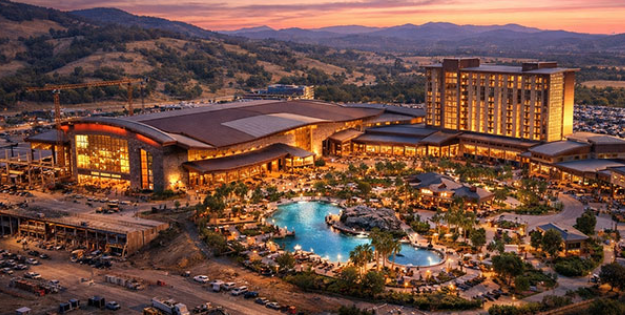
The tug-of-war between federal trust and state authorization
The core conflict of this lawsuit lies in the collision of federal and state jurisdiction over this land. In 2011, the U.S. Department of the Interior recognized the North Fork Tribe's ancestral connection to this site north of the city of Madera and approved its development as a gaming site. In 2012, then-Governor Jerry Brown signed a tribal-state gaming compact with the tribe, green-lighting the casino. However, a statewide referendum in 2014 rejected the casino project, and opponents used this as a weapon to aggressively challenge it in court. Last December, the Fresno Court of Appeals ruled that the casino was not authorized by California, and this month the Supreme Court declined to intervene, effectively settling the judgment.
But the tribe has always clung to a bottom line: the federal court had previously dismissed the lawsuit against the Department of the Interior's approvals, and the then federal judge Beryl Howell had harshly told the opponents, "The law is not on your side." In the tribe's narrative, the state court's ruling is at most a side note, while the federal court's final judgment is the main storyline.
The enduring resistance of the Picayune Rancheria
The biggest opponent of the North Fork casino project is not the state government, but the Picayune Rancheria, also rooted in Madera County. This tribe, which operates the Chukchansi Gold Resort & Casino, has been setting legal roadblocks at every step of the approval process for the North Fork project for over a decade. They firmly hold onto the fact that the statewide referendum in 2014 rejected the casino, claiming that the governor's endorsement at the time had already been invalidated, and even accused North Fork of "reservation shopping"—moving from an 80-acre mountain reservation to a site along Highway 99, 36 miles away, purely exploiting legal loopholes.
This "tribe against tribe" drama reflects the deep anxieties under the saturated competition in California's tribal gaming market. One more casino means one more competitor for customers and gaming revenue, especially a large project located next to a major traffic route and operated by Las Vegas-based Station Casinos, whose siphoning effect on existing players cannot be underestimated.
The economic account of over a thousand jobs and eight restaurants
Setting aside legal entanglements, the scale of the North Fork casino project is indeed significant. The planned resort will feature over 2400 slot machines, 40 gaming tables, and 8 dining venues, expected to create about 1000 direct jobs. The tribe emphasizes that the project will benefit over 3000 tribal citizens, and inject new economic vitality into Madera County. Last year, the tribe secured nearly $725 million in financing led by VICI Properties, and construction has been progressing since breaking ground in 2024, with the tribe still calling on social media to "open doors to guests this year."
PASA official website continues to track North American tribal gaming dynamics, noting that the essence of the North Fork casino case is not an isolated license dispute, but a stress test of federal priority rights versus state law boundaries under the framework of the Indian Gaming Regulatory Act. The uniqueness of the tribal casino lies in its legal anchor not being in state regulatory agencies, but in federal trust land and tribal sovereignty. As long as the federal level approvals are solid, the state court's rulings are always just paper to the tribe.
This tug-of-war is unlikely to end here. Opponents can still find new breakthroughs in federal court, while the North Fork Tribe is clearly prepared to stand firm to the end. Alongside Highway 99 in Madera County, the sound of bulldozers and cranes is louder than the debates in court.
————
This article is from "PASA-Global iGaming Leaders," a gambling industry news channel:https://t.me/pasa_news
Original deep channel for gambling:https://t.me/gamblingdeep
Free data reports: @pasa_research
PASA Matrix: @pasa002_bot
PASA official website: https://www.pasa.news