
On a long-silent plot of land beside Highway 16 in the outskirts of North Battleford, Saskatchewan, Canada, the roar of bulldozers is rewriting the destiny of a city and an indigenous tribe. The Mosquito Grizzly Bear's Head Lean Man First Nation recently held a community meeting to update members and stakeholders on the latest progress of the casino resort project—an investment locked at 100 million Canadian dollars, covering three major sections: casino, hotel, and conference center, with about 60 million Canadian dollars of tribal funds invested. Chief Tanya Stone did not use any vague diplomatic terms at the meeting, directly defining this project as a model of economic autonomy. The federal government has returned the land to the First Nation, and in her view, every shovel of soil dug is fulfilling the promise of the reconciliation process. For this inland city, which has long relied on traditional agriculture and resource industries, a large complex attracting an estimated 500,000 visitors annually means a triple flip in employment, tax revenue, and regional reputation.
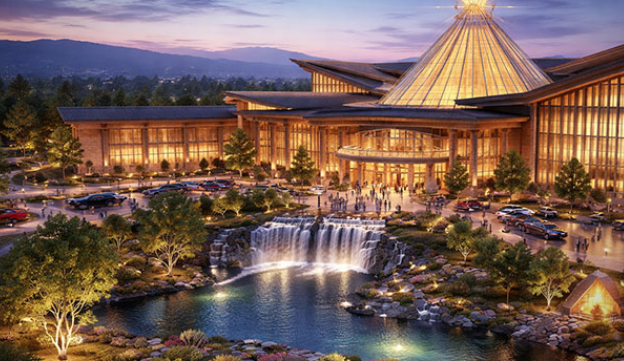
Relocating from the Golden Eagle Casino to the Highway Economic Belt
The core engine of the project is the relocation and expansion of the Golden Eagle Casino, which has been operating for thirty years. The old site was limited by space and facilities, with its reception capacity and consumer experience already reaching the ceiling. The new site has about 27 hectares of space. The construction phase of the casino is expected to create over 350 construction jobs, and once operational, it will provide about 400 long-term positions. The tribe has estimated a construction period of three years, but the current pace of construction shows that all parties are confident about the timeline.
The plot was previously a Canadian motel destroyed by fire, and the tribe completed the land transaction at the end of last year for 1.93 million Canadian dollars, setting a record for the largest single land sale in the history of North Battleford. For a city with just over 10,000 people, this figure alone speaks volumes about the project's significance locally. Chief Stone used a significant term when discussing the return of the land—reconciliation. She believes it's not just about building houses, but a symbolic step for the First Nation to re-center itself in the economic arena.
A tangible example of treaty economics from paper to reality
Federal Sovereign Indigenous Alliance Chief Bobby Cameron has framed this development plan as a tangible product of treaty economics—on the lands of Treaty 4 and Treaty 6, the First Nation is no longer just a passive recipient of resource distribution, but a complete market entity holding land, capital, and operational rights. The Saskatchewan Indian Gaming Authority, as a core partner of the project, with its CEO Zane Hanson publicly stating, the new resort will elevate the entire region's tourism reception level.
This tripartite interest structure provides the project with a stable institutional expectation. The federal government returns the land, the tribe leads the development with its own capital, and the provincial gaming authority provides operational standards and regulatory endorsements, with profits ultimately benefiting community public services. In the Canadian indigenous gaming landscape, this path, bypassing commercial gaming operators, is carving out a highly recognizable independent track in Saskatchewan.
City government cooperation and the realistic ledger of a three-year construction period
North Battleford Mayor Kelly Hawtin's statement reveals the local government's practical calculations. Zoning revisions, municipal service agreements, and resident opinion collection are procedural tasks being advanced in sync with the tribal side. For a city in dire need of job growth and service industry upgrades, the annual visitor flow estimate of 500,000 is the most persuasive business card. From the highway exit to the casino lobby, the design of the movement line, parking capacity planning, and the reserved layout of surrounding commercial land, every detail is testing the depth of cooperation between the two parties.
PASA's official website continues to track the dynamics of the North American indigenous gaming industry, noting the uniqueness of the Saskatchewan case in terms of land ownership closure. The federal government returns the land to the tribe, the tribe develops gaming properties with its own capital, and the Saskatchewan Indian Gaming Authority provides operational endorsement, with profits benefiting the community—this path in the Canadian indigenous gaming landscape has carved out a highly recognizable route.
Of course, a three-year construction period means a longer wait for capital recovery, and variables such as mid-term raw material price fluctuations, labor market changes, and regulatory approval rhythms cannot be underestimated. But from the tribal leadership to the city government to the provincial gaming authority, the high coupling of interests of the three parties at least constructs an institutional firewall for the project's advancement. On the side of Highway 16 in North Battleford, more significant than any political slogan are the bulldozers already on the ground and the concrete bases being poured.
————
This article is from "PASA-Global iGaming Leaders," a gambling industry news channel:https://t.me/pasa_news
Original deep channel for gambling:https://t.me/gamblingdeep
Free data reports: @pasa_research
PASA Matrix: @pasa002_bot
PASA official website: https://www.pasa.news